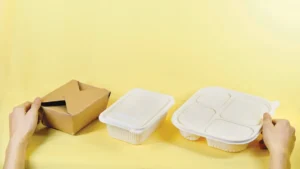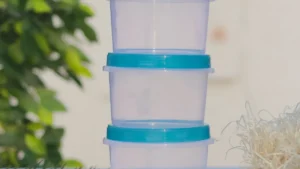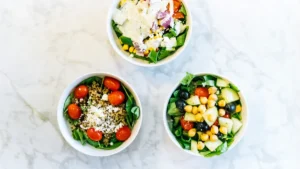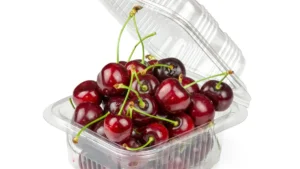
Clear clamshell containers are hinged plastic packages that enclose food securely. Commercial food services rely on these hinged boxes for physical protection and retail presentation. Clear walls display fresh salads and hot entrées directly to buyers. Tight seals stop accidental leaks during transport and block outside contamination.
The clamshell packaging market is projected to reach $13.3 billion by 2034, growing at a 3.2% CAGR.
You must navigate strict material performance standards, temperature limits, unit costs, high minimum order quantities, and evolving eco-friendly rules. Balancing PET against bioplastics requires careful testing for your specific temperature needs. This Clear Clamshell Containers Wholesale Buyer’s Guide simplifies your sourcing decisions.
Key Takeaways
Choose PET containers for cold food display and PP containers for hot, microwavable meals.
Industrial composting facilities break down PLA bioplastics, so avoid using home compost bins for them.
Perform water leak tests and 3-foot drop tests on sample boxes before placing bulk orders.
Buy higher case volumes to lower your per-unit costs and save money on your order.
Check local plastic laws and verify FDA compliance to ensure safe food packaging.
Material Selection Matrix for Clear Clamshells
Selecting the correct polymer ensures your packaged food looks appealing while maintaining package integrity. You must match container materials directly to your operational thermal requirements, target food items, and regional environmental rules.
PET vs. PP Clarity and Thermal Resistance
Polyethylene Terephthalate (PET) offers clear and glossy walls with glass-like clarity. PET containers showcase bakery items, fresh fruits, raw vegetables, and cold deli items exceptionally well. PET softens and deforms above 60°C (160°F). You must avoid placing hot items or microwaving food inside PET packaging.
Polypropylene (PP) provides a good, clean look with a slight haze. PP resists high heat up to 120-140°C (up to 230°F). You can safely use PP containers for hot ready meals like rice, pasta, and gravies. PP also holds up well against oily and saucy foods like curries and stir-fries.
Property | PET | PP | PLA |
|---|---|---|---|
Clarity | Clear and glossy (highest clarity) | Good (slight haze) | Very Good (slight yellowish tint, slightly cloudy) |
Heat Resistance | Moderate (softens ~160°F/70°C, begins deforming below 60°C) | High (stable up to ~230°F/110°C, withstands 120-140°C) | Low (deforms ~110°F/45°C) |
Relative Cost | Moderate | Low to Moderate | High (20-50% premium over PET) |
You must check supplier specifications for explicit ratings before purchase. Verify whether your chosen containers carry freezer-safe, microwave-safe, or dishwasher-safe ratings. Using PP guarantees heat performance for hot fulfillment lines. Using PET maximizes retail impulse purchases through unmatched clarity.
PLA Bioplastics and Industrial Compostability
Polylactic Acid (PLA) offers a plant-based alternative to traditional petroleum plastics. PLA provides very good transparency with an acceptable level of clarity, though it shows a slight yellowish tint or cloudiness compared to PET. PLA deforms at lower temperatures around 110°F (45°C). You should only use PLA for cold food applications. PLA carries a 20-50% cost premium over standard PET options.
Commercial facilities process PLA through high-heat industrial composting systems rather than home compost bins.
You cannot dispose of PLA containers in standard residential compost piles. Industrial composting facilities maintain high temperatures and specific moisture levels to break down bio-based polymers properly. You must verify recognized industry standards before buying bio-based packaging to ensure compliance with waste management mandates.
Certification / Standard | Region / Type | Key Purpose for PLA Clamshells |
|---|---|---|
BPI Certification | Leading North American certifier | Verifies product testing to break down in an industrial composting facility per ASTM standards |
TÜV Austria OK Compost INDUSTRIAL | Global certification | Verifies product breakdown in high-heat commercial composting environments |
ASTM D6400 | Scientific test method (North America) | Defines scientific criteria for plastics designed for industrial composting facilities |
EN 13432 | Standard (Europe) | Defines European requirements for industrial compostability through specific testing |
You must confirm these certifications on product spec sheets. These credentials prove your clear clamshell containers satisfy rigorous commercial disposal requirements. Choosing certified packaging protects your brand reputation and supports circular economy goals effectively.
Performance and Food Safety Criteria
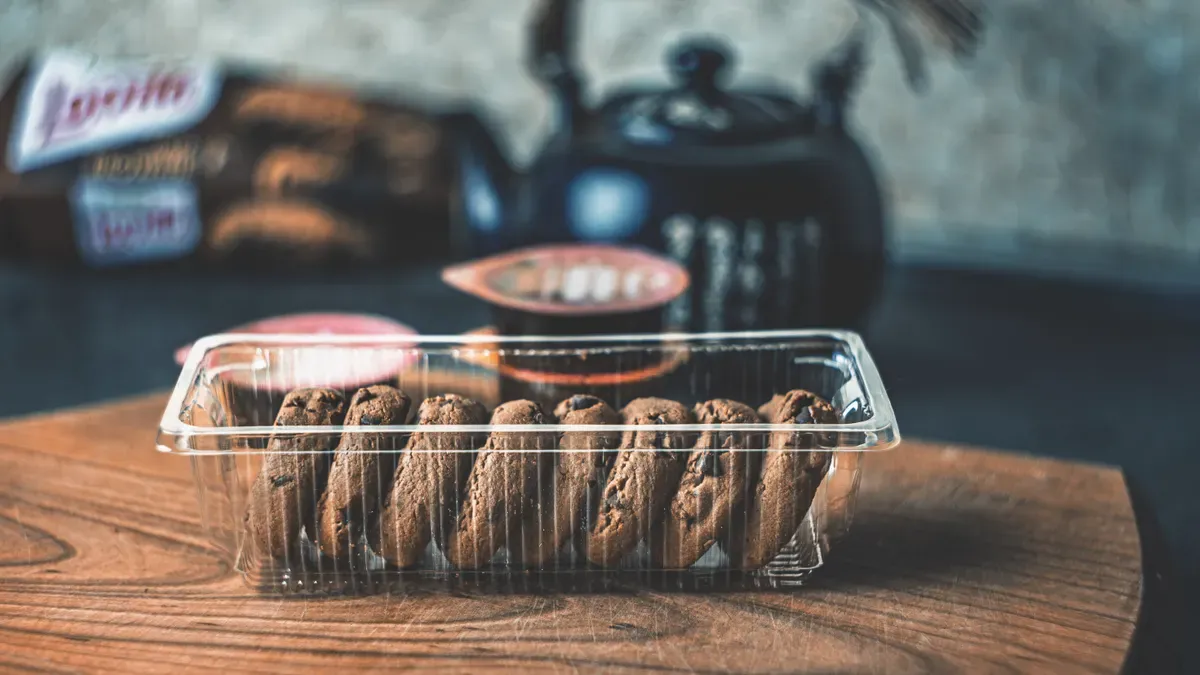
Structural Integrity and Leak Resistance
Thermal cycling warps unstable polymers during shipping. Temperature changes break continuous perimeter seals and create fluid leak pathways. Weak latch mechanisms fail under delivery vibrations, causing accidental openings and total food loss. You must select clamshells with reinforced corner designs because corner flaws cause 70% of packaging leaks. Engineered side ribs and double-thickness edges increase stacking strength and prevent container collapse.
You should perform practical stress tests on sample batches before placing bulk wholesale orders. A standard leak test requires filling the box with 500ml of water and food coloring. You seal the lid, invert the unit for 60 seconds, and shake it vigorously inside a bag. Zero leakage confirms effective latch design. For hot food fulfillment, fill containers with 85°C vegetable oil for 30 minutes to test lid stability and seal tightness.
Supplier Certifications and FDA Compliance
You must verify supplier regulatory compliance to protect consumer health and prevent product recalls.
FDA regulations require that food packaging be produced under Good Manufacturing Practices (GMPs) to ensure consistent quality and safety, as outlined in 21 CFR 174.5.
Polymer types require specific regulatory verifications. PET clamshells must meet 21 CFR 177.1630 standards, while PP materials must satisfy 21 CFR 177.1520 requirements. Top manufacturers maintain ISO 9001 certification for quality control and FSSC 22000 certification for food safety management.
Verifying European market compliance requires a complete paper trail of official technical records. You must request an official EU Declaration of Conformity directly from the factory manufacturer. Reviewing independent laboratory test reports verifies overall migration limits and specific migration limits. Third-party laboratories test sample materials with appropriate food simulants under exact exposure times and temperature conditions. Maintaining updated compliance files protects your operational supply chain from regulatory violations.
Wholesale Buyer’s Guide to Pricing and MOQs
Navigating MOQs and Volume Price Tiers
You must evaluate minimum order quantities (MOQs) to secure favorable wholesale unit costs. Wholesale suppliers set different purchasing thresholds based on their manufacturing capacity. For example, Fuling Technology Co., Ltd. sets a minimum order quantity at 50 cartons for square hinged clear PET clamshells. LRpacking requires 50,000 pieces for standard clear clamshell containers, while SKYDEAR requires a full 40HQ container mix. Higher volumes unlock significant cost savings for your business.
Quantity Range (Pieces) | Unit Price (USD) |
|---|---|
100,000 – 499,999 | $0.094 |
500,000 – 999,999 | $0.092 |
1,000,000+ | $0.0895 |
Container dimensions directly impact your overall procurement expenses. Smaller cases yield higher per-unit costs, whereas bulk orders decrease your per-unit expenditure.
Material | Size | Quantity per Case | Price per Case |
|---|---|---|---|
Polystyrene | 6″ | 125 | $48.33 |
Polystyrene | 6″ | 500 | $96.10 |
Polystyrene | 9″ | 250 | $93.88 |
Polystyrene | 9″ | 125 | $64.43 |
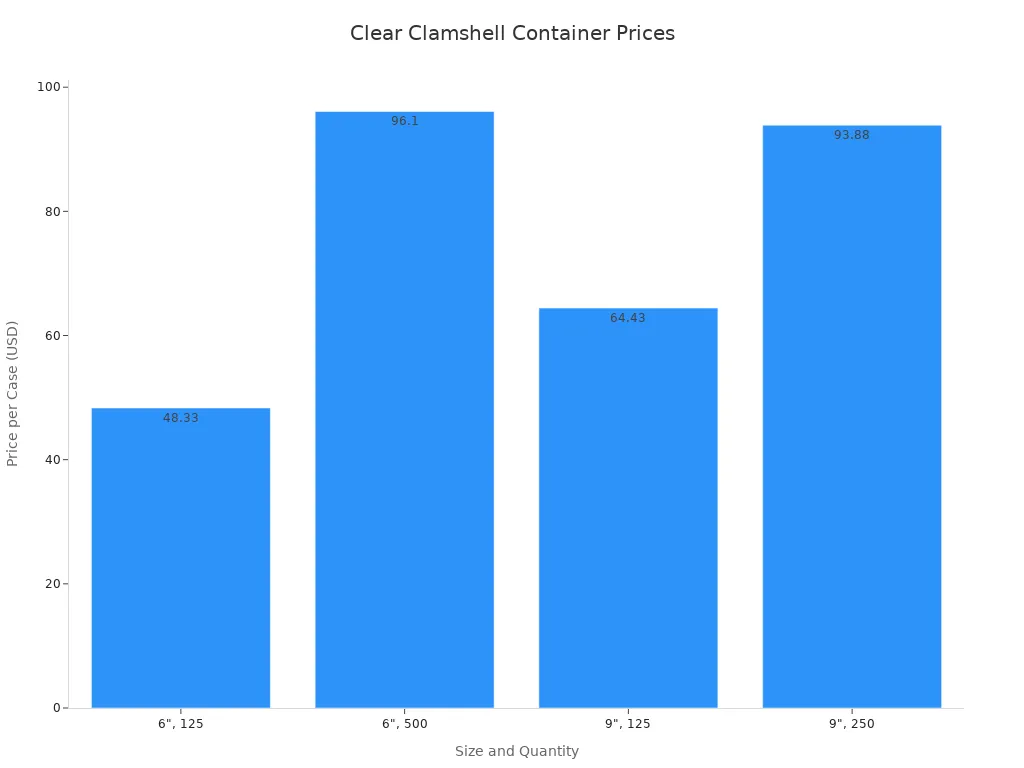
Calculating per-unit rates from case totals reveals clear financial patterns. For a 6″ polystyrene container, purchasing 125 units per case results in a $0.39 unit price ($48.33 / 125). Increasing case size to 500 units drops the unit price to $0.19 ($96.10 / 500). Across these two case volumes, the 6″ size averages $0.36 per unit. Meanwhile, 9″ containers average $0.44 per unit, moving from $0.52 per unit for 125 cases ($64.43 / 125) down to $0.38 per unit for 250 cases ($93.88 / 250). Following this Wholesale Buyer’s Guide strategy optimizes your overall inventory budget.
Custom Tooling and Branding Options
MOQ Type | Trigger / Condition | MOQ Requirement |
|---|---|---|
Standard MOQ | Existing standard product with logo embossing, color printing, custom outer carton, or private label packaging | No increase from original standard MOQ; buyer only meets the regular item MOQ |
Custom MOQ (New Mold) | Exclusive mold with new size, new shape, or special structure | Negotiated case-by-case; depends on mold engineering, product testing, sampling, machine adjustment, production verification, and buyer’s long-term order plan |
You can enhance brand recognition using surface decoration techniques. Standard custom options include:
Embossing and Debossing
Foil Stamping, Spot UV, Gloss, Matte, and Soft Touch Lamination
Custom sleeves, labels, and tamper-evident seals
This Wholesale Buyer’s Guide helps you select the right branding options without exceeding your operational budget.
Compliance and Sustainability Trends
Government regulations are forcing rapid shifts toward environmentally responsible packaging. You must adapt your procurement strategy to meet these legal guidelines.
PFAS-Free Mandates and Plastic Bans
Regions worldwide enforce strict bans on single-use plastics to reduce ocean pollution.
In June 2021, the European Union outlawed plastic packaging for food and beverage containers, drinking cups, and beverage containers that frequently wash up on the continent’s coasts.
North American governments also accelerate single-use restrictions across several jurisdictions:
United States: California prohibits single-use plastic cutlery and polystyrene containers. New York restricts delivery utensils and polystyrene. Oregon, New Jersey, and Vermont mandate compostable choices over plastic straws and bags.
Canada: A federal ban includes takeout containers, plastic bags, cutlery, ring carriers, and straws.
You must also source PFAS-free containers to meet strict chemical restrictions.
Jurisdiction | Mandate Description | Effective Date |
|---|---|---|
Colorado (US) | Expanded Consumer Protection Act food packaging restrictions | 2025 |
New Mexico (US) | Ban on intentionally added fluorochemicals | April 2025 |
Vermont (US) | Ban on fluorinated packaging compounds | January 2026 |
Washington State (US) | Restriction of priority fluorochemicals | 2025 |
Post-Consumer Recycled Content Standards
Post-consumer recycled (PCR) content standards require verified supply chains. This Wholesale Buyer’s Guide helps you verify legitimate third-party supplier credentials.
Certification | Scope | Min. Recycled Content |
|---|---|---|
SCS Recycled Content (SCS-103) | Verifies PCR percentage vs pre-consumer material | 5% |
Global Recycled Standard (GRS) | Recycled content and environmental criteria | 20% |
ISCC PLUS | Sustainable, recycled, and bio-based feedstocks | Not specified |
Using PCR resin introduces serious processing challenges for manufacturers:
Intrinsic viscosity mismatch degrades structural integrity under physical stress.
Residual food contamination and aggressive label adhesives clog washing systems.
Manual sorters fail to separate PET from look-alike PVC clamshells.
National PET recycling averages ~30%, but food service clamshells fall to 15–25%. Choosing verified materials protects your long-term food supply operations.
Selecting clear clamshell containers requires matching your menu items to polymer thermal limits and local regulations. You must review food temperatures, oily menu needs, compartment layout, and market destination requirements. A proper pre-purchase checklist protects your operations. You should verify BRC or ISO factory certifications, PFAS testing letters, and laboratory test reports.
You must request standard-size samples to test real-world compatibility on your fulfillment line. Perform physical drop tests from three feet to verify hinge durability and closure integrity. Execute real-menu fit tests to confirm performance. Following this Wholesale Buyer’s Guide empowers your procurement strategy. Request sample kits and custom quotes from suppliers today to upgrade your packaging inventory.
FAQ
What temperature limit applies to clear PET clamshell containers?
PET clamshells soften and deform above 60°C. You must use PET packaging exclusively for cold foods, cold delis, and fresh produce. You should never place hot meals or microwave food inside PET containers.
Can you microwave polypropylene clamshell containers safely?
Yes, polypropylene containers resist heat up to 120–140°C. You can safely microwave hot ready meals, curries, and oily food inside PP packaging without melting the container walls or ruining the lid fit.
Can you put PLA bioplastic clamshells into home compost bins?
No, home compost bins cannot break down PLA bioplastics. You must send PLA containers to industrial composting facilities that meet ASTM D6400 or EN 13432 standards. PLA deforms near 110°F, so you should only use it for cold applications.
Which FDA regulations govern plastic food packaging safety?
The FDA enforces Good Manufacturing Practices under 21 CFR 174.5. Additionally, PET clamshells must meet 21 CFR 177.1630 standards, while polypropylene packaging must comply with 21 CFR 177.1520 requirements for direct food contact.