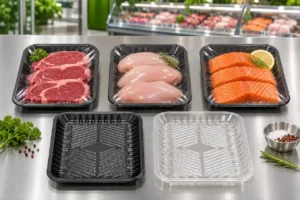
Meat trays are a small component of a food program, but a poor selection can create problems during filling, refrigerated display, transport and warehouse replenishment. Commercial buyers therefore need to compare more than the tray length and width. Material, depth, rim profile, structural support, sealing method, absorbent-pad space and carton packing all affect whether a tray works in the intended process.
This buyer’s guide uses documented KD Food Pack PET meat-tray models as practical examples. It is designed for meat processors, supermarkets, food factories, packaging distributors and foodservice buyers preparing a sample request or purchase specification.
Start With the Meat Portion and Packing Process
Before comparing tray models, record the maximum product length, width and height at the intended pack weight. Include any absorbent pad, overwrap, sealing film or matching lid in the evaluation. A tray that appears suitable when empty may be too shallow after filling or may leave excessive movement around a smaller portion.
The packing process matters as much as the food. Buyers should confirm whether trays will be filled manually or on a production line, how they will be closed, the expected refrigerated-storage period, the packed stacking height and the carton quantity required for recurring production.
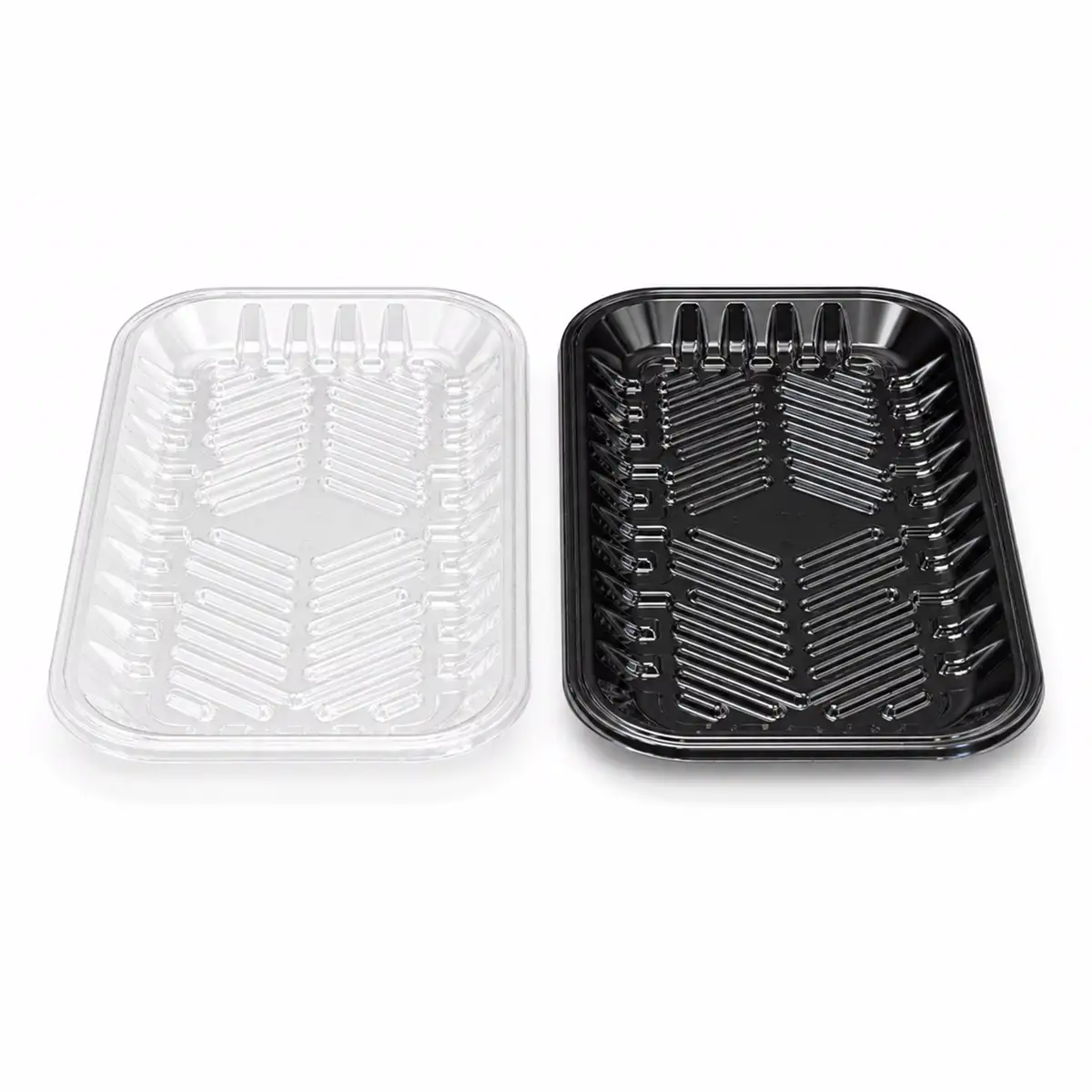
PET or PP: Confirm the Material Around the Application
KD Food Pack manufactures thermoformed PET and PP food packaging. PET is commonly selected when clear refrigerated presentation is important. PP may be considered when a project has different handling or temperature requirements. The correct choice must be based on the food, packing process, closure system and destination-market requirements rather than the material name alone.
The five stock models compared below are documented as PET fresh-meat trays. Buyers who require black PP trays, a different rim, custom dimensions or another closure format should provide those requirements before sampling.
Five Meat-Tray Specifications Buyers Should Compare
1. Footprint
Compare the usable tray area with the actual cut or portion. A long narrow item may need a very different footprint from a compact steak or poultry portion even when the packed weights are similar.
2. Depth
Tray depth influences product clearance, liquid-management space and how the portion appears on display. A shallow tray can work for flatter cuts, while a deeper tray may better accommodate thicker products. The final decision should be made with filled samples.
3. Rim and closure method
The rim must match the intended closure process. Some applications use film sealing, while others use overwrap or a matching lid. Compatibility cannot be assumed from the tray dimensions. Test the selected tray with the actual film, lid and packing equipment.
4. Internal support and absorbent-pad space
Base ribs and sidewall structures help support the packed product. If an absorbent pad is required, provide the pad dimensions and expected liquid level when requesting samples. A pad should fit without interfering with the rim or reducing the required product clearance.
5. Carton packing
Tray nesting, pieces per carton and outer-carton dimensions affect warehouse space, handling and replenishment. Compare carton data together with unit dimensions so that a lower unit price does not create avoidable storage or production-line problems.
KD Food Pack PET Meat-Tray Size Comparison
The following figures come from KD Food Pack’s current product documentation and provide a starting point for sample selection.
| Model | Product Dimensions | Unit Weight | Carton Packing | Carton Size |
|---|---|---|---|---|
| 10S | 260 × 205 × 16 mm | 23 g | 500 pcs/carton | 56 × 33.5 × 15.5 cm |
| 16S | 298 × 191 × 19 mm | 35.5 g | 250 pcs/carton | 38.5 × 30 × 19.5 cm |
| 20S | 221 × 114 × 10.3 mm | 18 g | 500 pcs/carton | 45 × 30 × 17.5 cm |
| 25S | 380 × 206 × 16 mm | 50 g | 200 pcs/carton | 38.5 × 30 × 21.5 cm |
| 27S | 221 × 168 × 38 mm | 35 g | 200 pcs/carton | 38.5 × 38 × 14.5 cm |
Reconfirm dimensions, packing and application requirements with the sales team before placing an order.
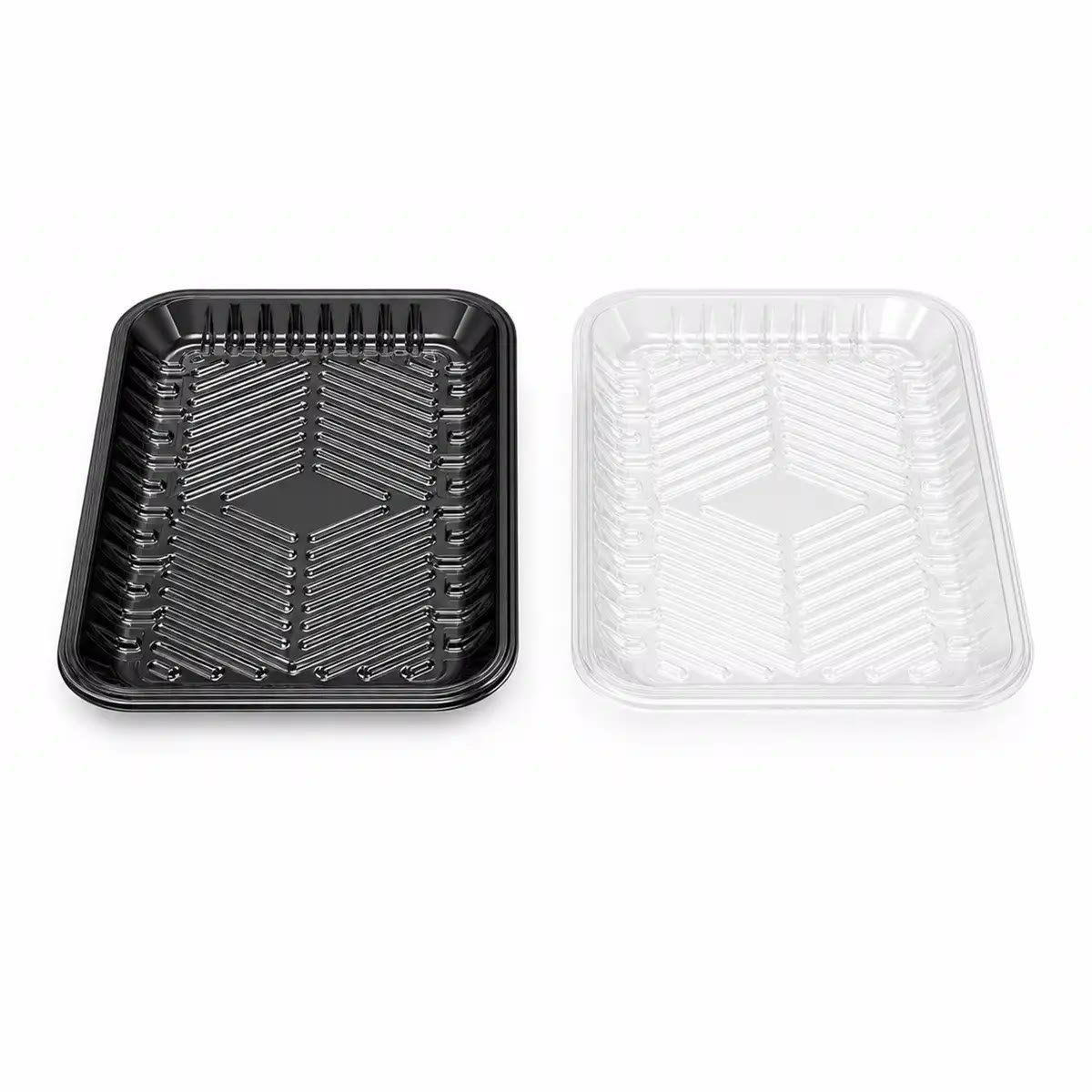
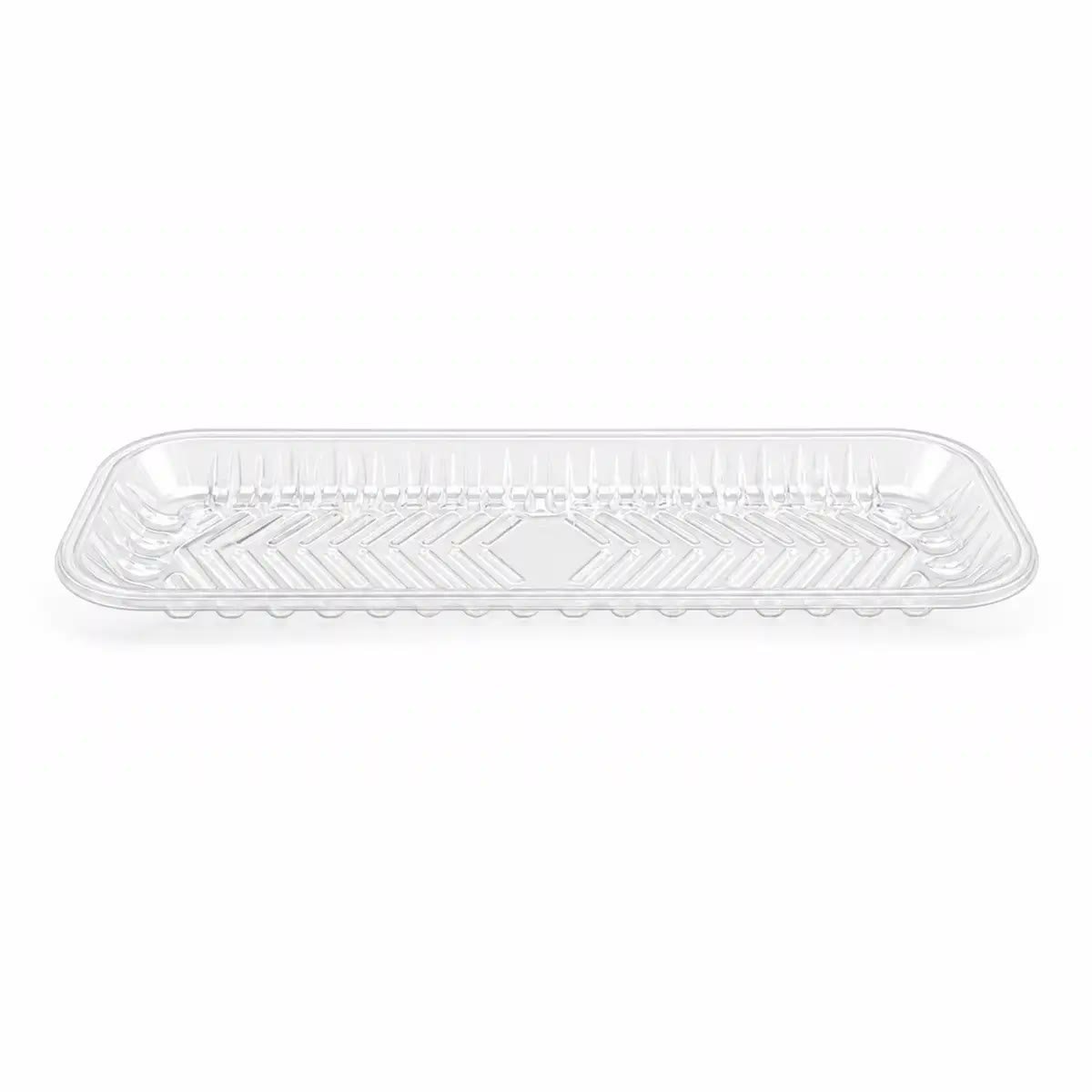
How the Models Differ in Practical Selection
Longer or larger presentation area
The 10S, 16S and 25S offer longer footprints. The 25S is the longest option in this comparison at 380 × 206 mm, while the 16S provides a 298 × 191 mm footprint. These formats can be shortlisted when the product needs more length or display area, but the product must still be tested for movement, rim clearance and packed stability.
Compact narrow portions
The 20S measures 221 × 114 × 10.3 mm and is the shallowest model in the table. Its narrower footprint may suit flatter or narrower portions when confirmed by sample testing.
Deeper portions
The 27S measures 221 × 168 × 38 mm and is the deepest option in this comparison. Buyers evaluating thicker portions or additional internal capacity can include it in testing, while checking product presentation and movement during distribution.
Film Sealing and Matching Lids Require Testing
Some fresh-meat packaging formats may be suitable for film sealing, while other programs use clear lids or overwrap. Compatibility depends on the tray material, rim profile, selected film or lid and the packing equipment. A successful hand-applied sample does not prove that the combination will run consistently on a production line.
Ask the supplier for the relevant tray samples, then test them with the intended equipment and closure material. Check rim contact, seal continuity, pack appearance and handling after refrigeration. Record the approved combination in the purchasing specification.
When Should a Meat Tray Use an Absorbent Pad?
An absorbent pad may be considered when the product and storage process can release liquid. The need and pad capacity depend on the meat type, portion, expected liquid level and distribution conditions. Buyers should not choose a pad only by tray size.
For evaluation, provide the pad length, width and thickness together with the product dimensions. Confirm that the pad lies flat, remains inside the usable base area and does not interfere with closure. Test the complete pack under the intended refrigerated handling conditions.
Sample-Approval Checklist for Meat Trays
- Pack the actual product at minimum, typical and maximum fill weights.
- Check product clearance, movement and tray deformation.
- Test the intended film, overwrap or matching lid.
- Verify absorbent-pad fit when a pad is required.
- Stack filled packs at the expected transport and display height.
- Run samples through the intended refrigerated-storage process.
- Confirm label area and visibility of required product information.
- Review pieces per carton, carton dimensions and warehouse space.
- Record the approved model, material, color and closure combination.
When a Custom Meat Tray Is the Better Option
A stock tray is normally the fastest starting point. Custom development may be appropriate when existing models do not provide the required footprint, depth, rim, base structure, color, absorbent-pad space or carton configuration.
KD Food Pack can evaluate stock and custom options around the meat type, portion dimensions, target pack weight, sealing process and distribution requirements. The development process may include requirement review, structural design, tooling, samples, testing and coordinated production. Learn more on the custom fresh meat tray manufacturer page and the food factory packaging solution page.
Frequently Asked Questions
Which meat-tray size should a buyer choose?
Measure the actual portion at the intended fill weight and compare its maximum length, width and height with the tray’s usable internal space. Shortlist suitable models, then test closure, stacking and refrigerated handling.
Can every PET meat tray be film sealed?
No compatibility should be assumed. The tray, film and equipment must be evaluated as a complete system before approval.
Can these trays accommodate absorbent pads?
Selected trays may accommodate pads, but buyers should provide the pad dimensions, product size and expected liquid level for evaluation.
What information is needed for a quotation?
Provide the meat type, portion dimensions, target pack weight, preferred tray size, material, color, closure method, expected quantity and destination market.
Request Meat-Tray Samples
Send KD Food Pack your portion dimensions, target pack weight, sealing method, pad requirements and expected order quantity. The team can recommend suitable stock meat trays or evaluate a custom structure. Request samples and a packaging recommendation.