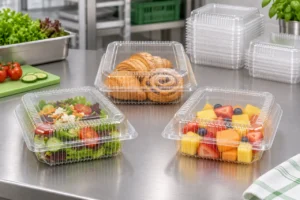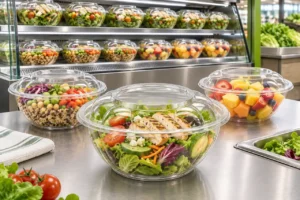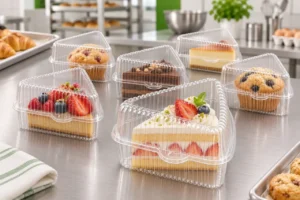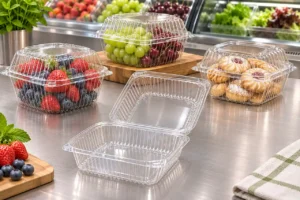
Choosing clamshell containers for a commercial food program is not simply a matter of finding a clear box that looks suitable. Procurement teams also need to compare the product footprint, usable depth, closure performance, carton packing and the way the package behaves during filling, stacking, refrigerated display and transport.
This guide focuses on practical size selection for PET hinged clamshell containers. It uses actual KD Food Pack models to help food manufacturers, retailers, distributors and foodservice buyers narrow down the right format before requesting samples.
What Is a Clamshell Container?
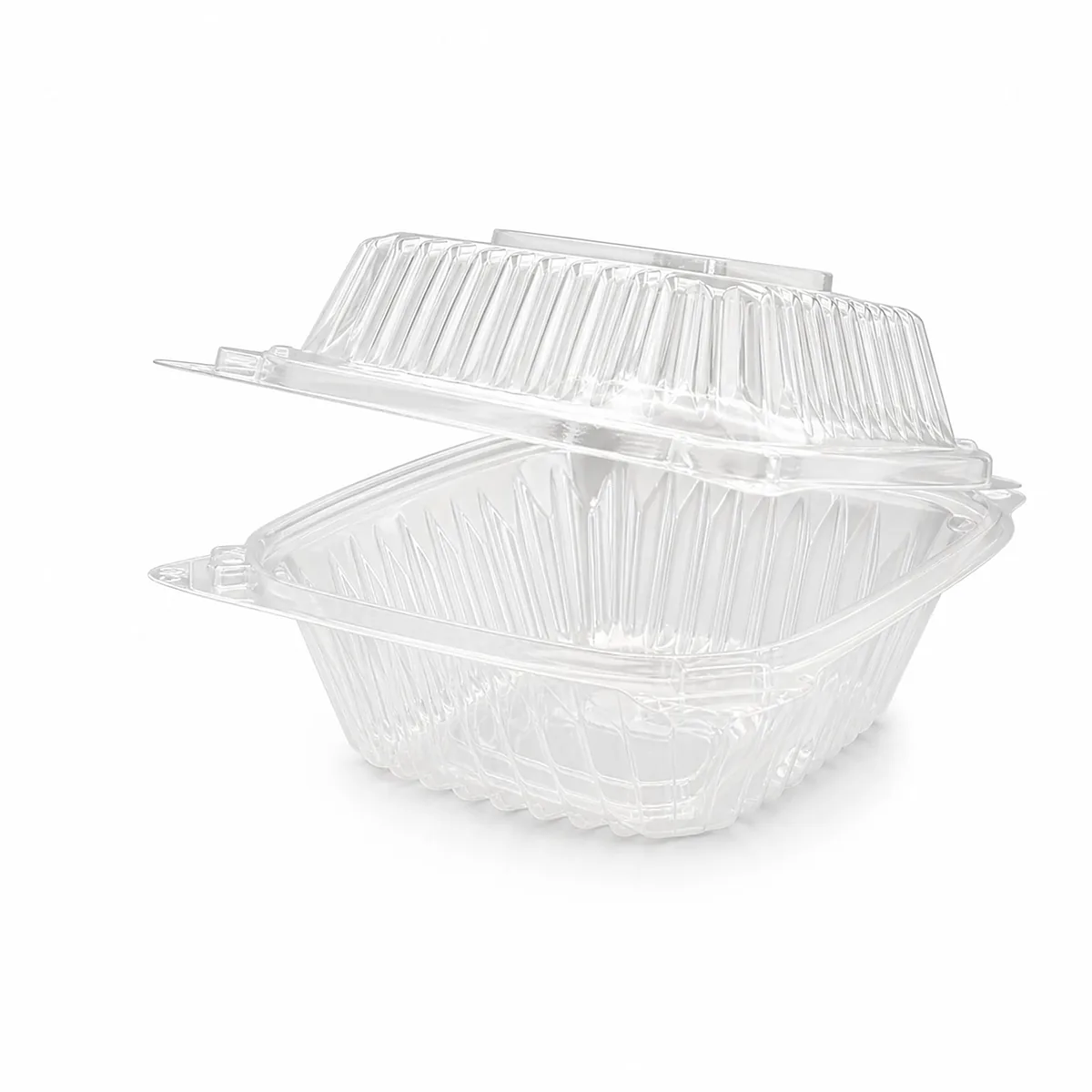
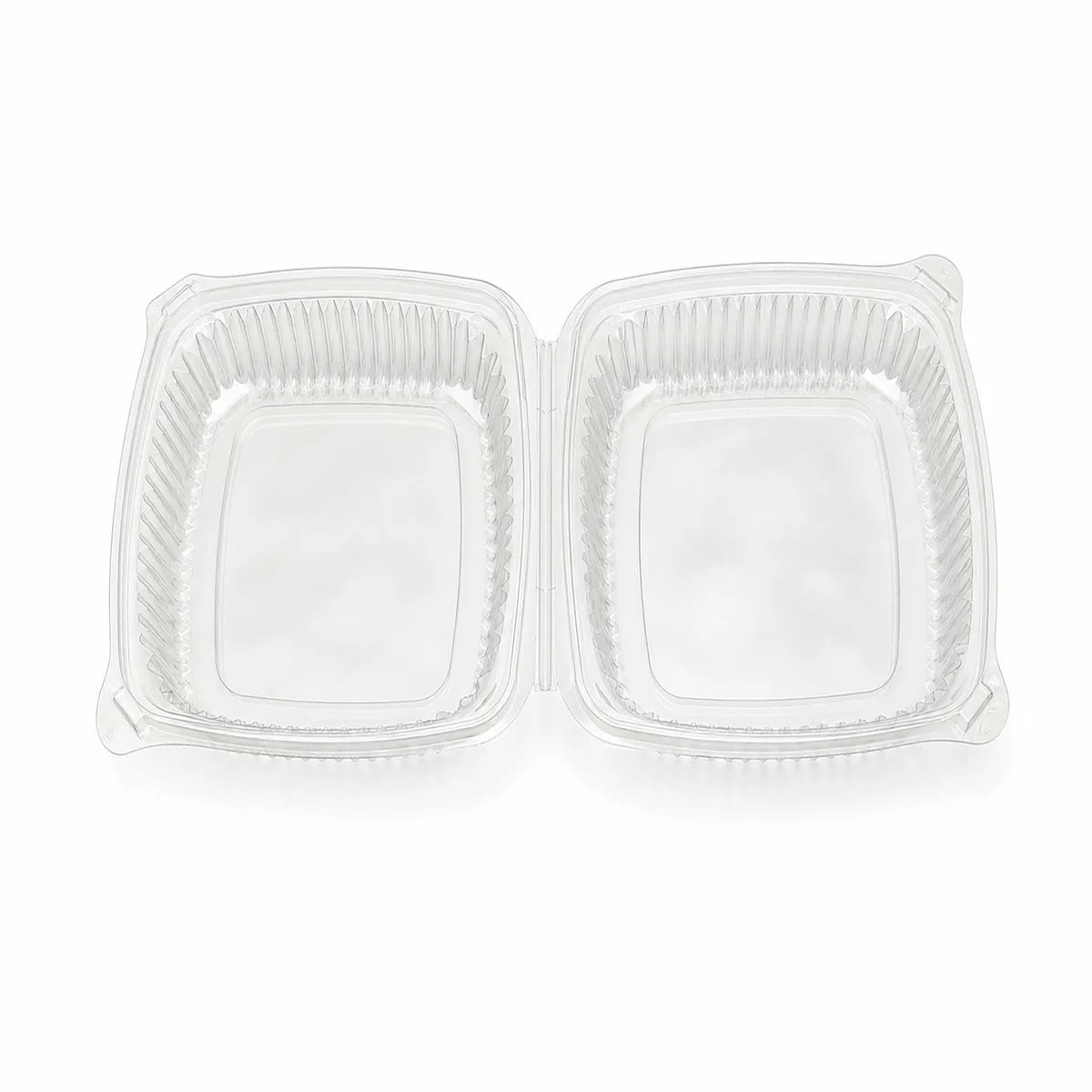
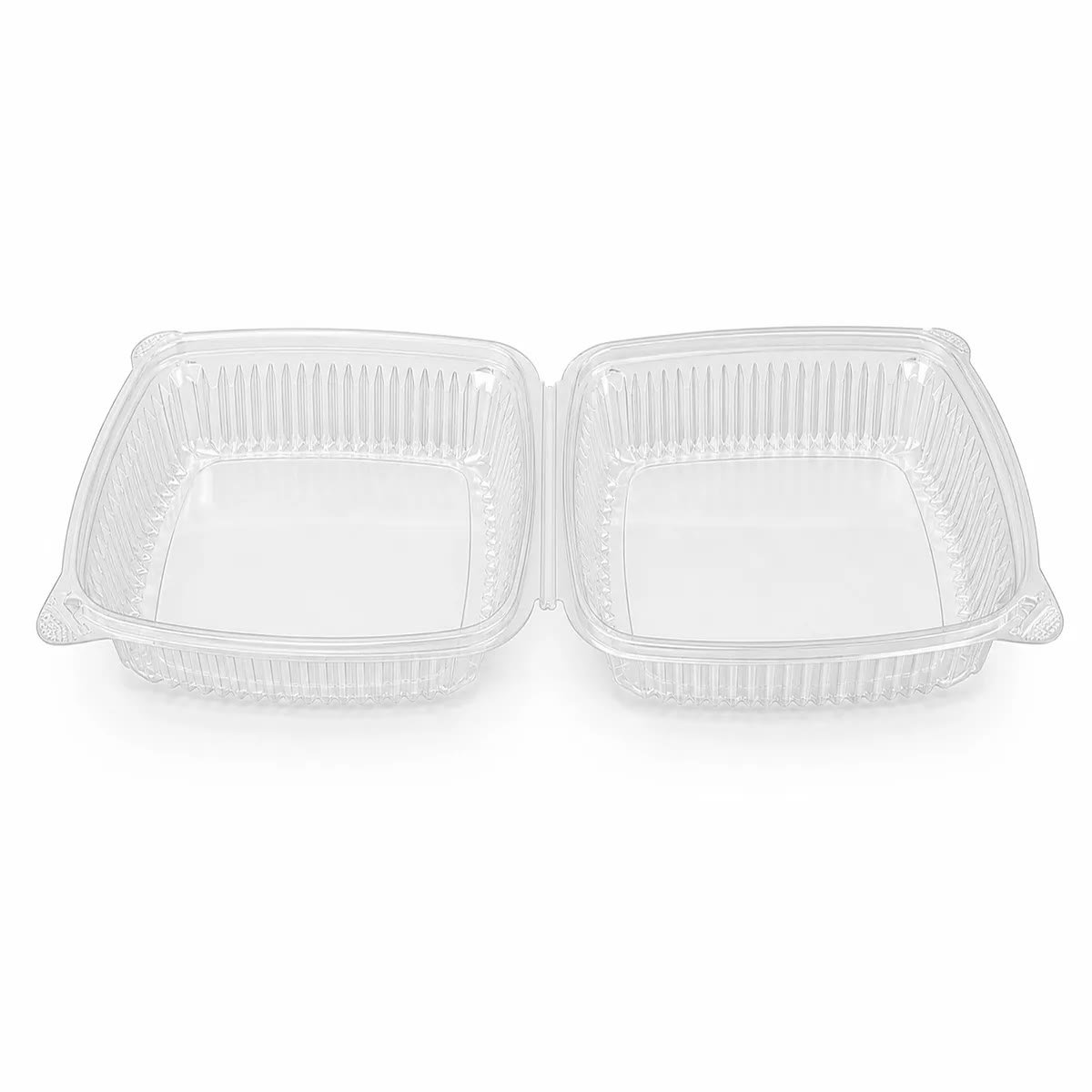
A clamshell container is a one-piece package with a base and lid connected by an integral hinge. The format gives buyers a clear, easy-to-identify package without sourcing a separate lid. PET construction is commonly selected when product visibility and a clean retail presentation are important.
The correct model still depends on the packed product. Two containers with a similar footprint may perform very differently when their internal depth, lid profile and fill height are not matched to the food.
Five Specifications Buyers Should Compare
1. Product footprint
Start with the length and width of the food, not only its weight. A compact bakery item, burger or portion pack may need a smaller square footprint, while a larger assortment needs more surface area to avoid crowding and pressure on the product.
2. Container depth and lid clearance
Depth affects both capacity and presentation. A package that is too shallow can press against the food or interfere with closure. An unnecessarily deep package can allow movement during transport and may make the portion appear smaller. Buyers should test the actual product at the intended fill weight.
3. Hinge and closure
A one-piece hinged design simplifies packing because the lid remains attached to the base. During sampling, check that the closure engages consistently after filling and that staff can close the container without excessive force.
4. Stacking and handling
Filled samples should be stacked at the expected case and display height. Confirm that the container remains stable, protects the food and can be handled through packing, cold storage and distribution.
5. Carton quantity and warehouse efficiency
Unit dimensions are only part of the purchasing decision. Carton quantity and outer-carton dimensions influence storage space, freight planning and replenishment frequency. Compare these figures before approving a model for recurring orders.
KD Food Pack PET Clamshell Size Guide
The following specifications are taken from KD Food Pack product documentation. They provide a useful starting point for shortlisting samples.
| Modelo | Product Dimensions | Unit Weight | Carton Packing | Carton Size |
|---|---|---|---|---|
| HC5 | 120 × 125 × 72 mm | 17 g | 500 pcs/carton | 60 × 26 × 50 cm |
| HC6 | 145 × 150 × 72 mm | 18 g | 500 pcs/carton | 52 × 31 × 58 cm |
| HC8 | 210 × 215 × 72 mm | 40 g | 500 pcs/carton | 52.5 × 42.5 × 42 cm |
| HC9 | 230 × 235 × 72 mm | 50 g | 500 pcs/carton | 51.5 × 48 × 44.5 cm |
| HCD8 | 140 × 125 × 35 mm | 17 g | 200 pcs/carton | 51 × 32.5 × 29 cm |
| HCD12 | 140 × 125 × 42 mm | 19 g | 200 pcs/carton | 51 × 34 × 29 cm |
| HCD16 | 140 × 125 × 56 mm | 22 g | 200 pcs/carton | 52 × 34 × 29 cm |
Dimensions and packing data should be reconfirmed with the sales team before placing an order.
How to Match a Model to the Application
Compact single-item packs
HC5 provides a compact square format and is listed for burger applications. Its 120 × 125 mm footprint is a practical reference point for buyers evaluating smaller individual portions. The actual food height, toppings and handling method should still be checked with a filled sample.
Medium and larger square packs
HC6, HC8 and HC9 keep the same general square hinged concept while increasing the footprint. These models are useful when a buyer needs more surface area for larger items or arranged assortments. Do not select solely by external dimensions; test product movement, closure and shelf presentation.
Lower-profile packs
HCD8, HCD12 and HCD16 share a 140 × 125 mm footprint but offer different depths. This gives buyers a structured way to compare shallow and deeper formats around the same general base size. The intended fill weight and lid clearance should determine which depth moves forward to testing.
A Practical Sample-Testing Checklist
- Place the actual food in the container at the target fill weight.
- Check clearance around the product and under the lid.
- Close and reopen multiple samples to evaluate handling consistency.
- Apilar los envases llenos a la altura de exhibición y transporte esperada.
- Run the package through the intended refrigerated storage and delivery process.
- Confirm label placement and visibility of important product information.
- Review carton quantity, carton dimensions and warehouse requirements.
When a Stock Clamshell Is Not the Right Fit
A stock model is usually the fastest starting point, but it may not meet every requirement. A custom thermoformed package can be evaluated when the product needs a different footprint, depth, lid profile, closure, stacking feature or label area.
KD Food Pack integrates tooling, thermoforming, inspection, packing and warehousing. The team can review the food application, target fill weight, production process and carton plan before preparing samples for confirmation. Learn more about plastic food packaging solutions or discuss a specific requirement through the contact page.
Preguntas frecuentes
Which clamshell container size should I choose?
Start with the food’s maximum length, width and height at the intended fill weight. Then shortlist models with suitable clearance and test closure, stacking and handling using the actual product.
Why is container depth important?
Depth influences capacity, product movement, lid clearance and shelf presentation. A deeper package is not automatically better; it must suit the product and packing process.
Should buyers compare carton dimensions?
Yes. Carton quantity and carton size affect warehouse space, freight planning and replenishment. They should be reviewed together with unit dimensions.
Can KD Food Pack develop a custom clamshell?
Yes. When a stock container does not provide the required capacity, closure or packing performance, the team can evaluate a custom thermoformed structure and prepare samples for testing.
Request the Right Clamshell Container
Send KD Food Pack your product dimensions, target fill weight, expected order quantity and packing process. The team can recommend existing clamshell containers or evaluate a custom format for your application. Request a quote and sample recommendation.