Commercial kitchens rely on precise container sizing to manage portion control and food costs. You select standard side portion sizes from 12–16 oz (355–473 ml) for small appetizers. Medium portions from 20–24 oz (591–710 ml) fit single-serving lunch orders. Main meal sizes from 28–32 oz (828–946 ml) hold heavy dinner entrees.
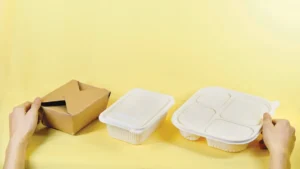
Pairing Wholesale Salad Bowls with matching lid types ensures product security. You choose clear PET, flat paper, or compostable PLA lids based on your menu needs. Tight peripheral rim locking mechanisms prevent messy leaks during off-premise delivery. Standardized top diameters consolidate lid inventory across multiple bowl capacities, reducing operational costs for your kitchen.
Key Takeaways
Select bowl sizes using usable food capacity instead of total volume to avoid spills.
Choose high-dome lids for tall layered salads to protect delicate toppings from crushing.
Buy bowls with matching top diameters to share one lid size across multiple capacities.
Test container samples with real food before you place bulk wholesale orders.
Capacity Options for Wholesale Salad Bowls

You must select container capacities based on your specific menu applications. Understanding container metrics protects your profit margins and prevents operational spillage.
Term | Definition | Primary Use in Selection | Common Operational Mistake |
|---|---|---|---|
Brimful Capacity / Volume | The maximum liquid volume a container holds when filled to the rim. | Comparing container sizes from catalog specifications. | Treating it as the exact portion size, leading to spillage. |
Real-Fill / Usable Capacity | Practical food amount served without spilling, accounting for food shape, sauce movement, and lid clearance. | Approving a specific container and setting portion standards. | Ignoring needed headspace for toppings and dressing, causing leaks. |
Small and Medium Portion Capacities
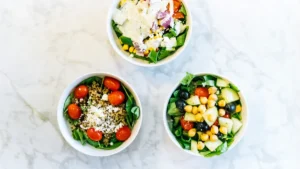
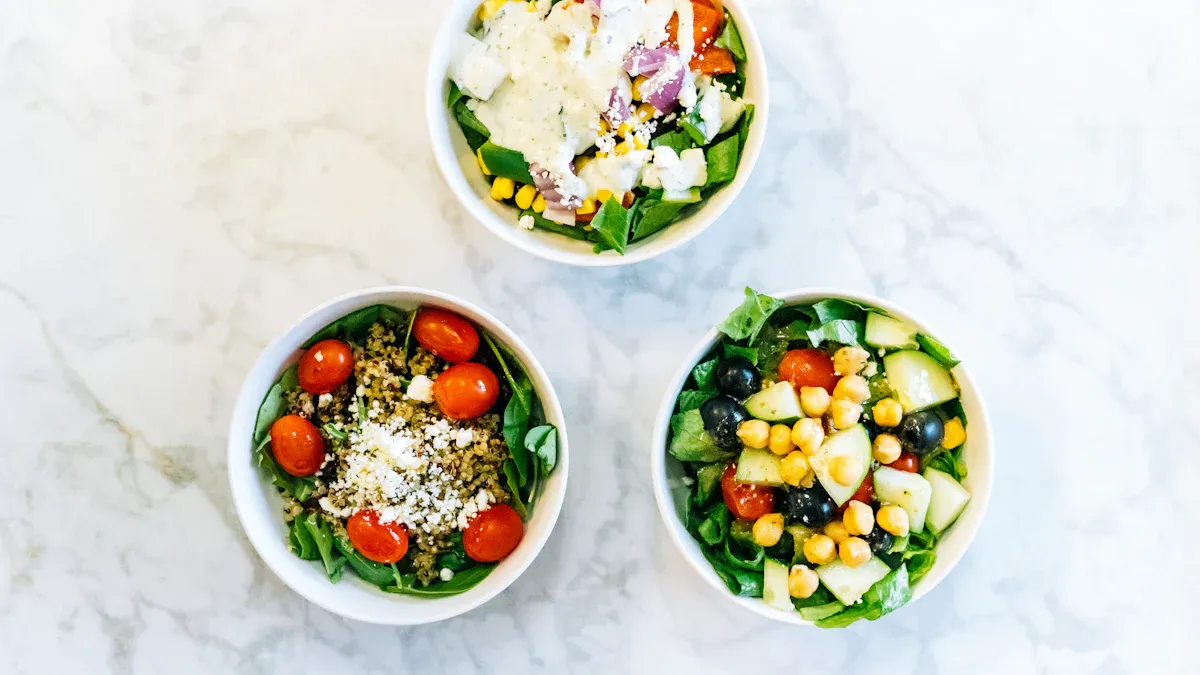
Small portion containers meet specific demands for side dishes and appetizers. You utilize 12 oz containers for side salads, lunch bowls, and takeout orders. The 16 oz bowl provides necessary space for light green salads and starter portions. These smaller capacities keep greens crisp while maintaining portion control.
For takeout orders, a 12 to 16-ounce bowl is recommended. This size accommodates most side salads, helps control portions, and—when paired with a lid—ensures the salad stays fresh during delivery.
Medium containers address standard individual meal requests. You select 20 to 24 oz options for single-serving lunch salads. Multi-ingredient grain bowls require capacities between 26 oz and 32 oz. Entrée protein bowls fit well within the 16 to 32 oz range. Choosing Wholesale Salad Bowls in these medium capacities provides customers with adequate food volume without causing messy spills.
Main Meal and Large Bulk Capacities
Main entrees and group catering require larger packaging solutions. Full-meal portions with proteins and heavy grains fit into 28 oz (828 ml) and 32 oz (946 ml) bowls. Large poke bowls or pasta salads fit into 36 oz (1065 ml) sizes. Shared family-style portions utilize 42 oz (1242 ml) containers. Deli counters and party trays require 44 oz (1301 ml) capacities. Catering events and group salads rely on 50 oz (1479 ml) bowls.
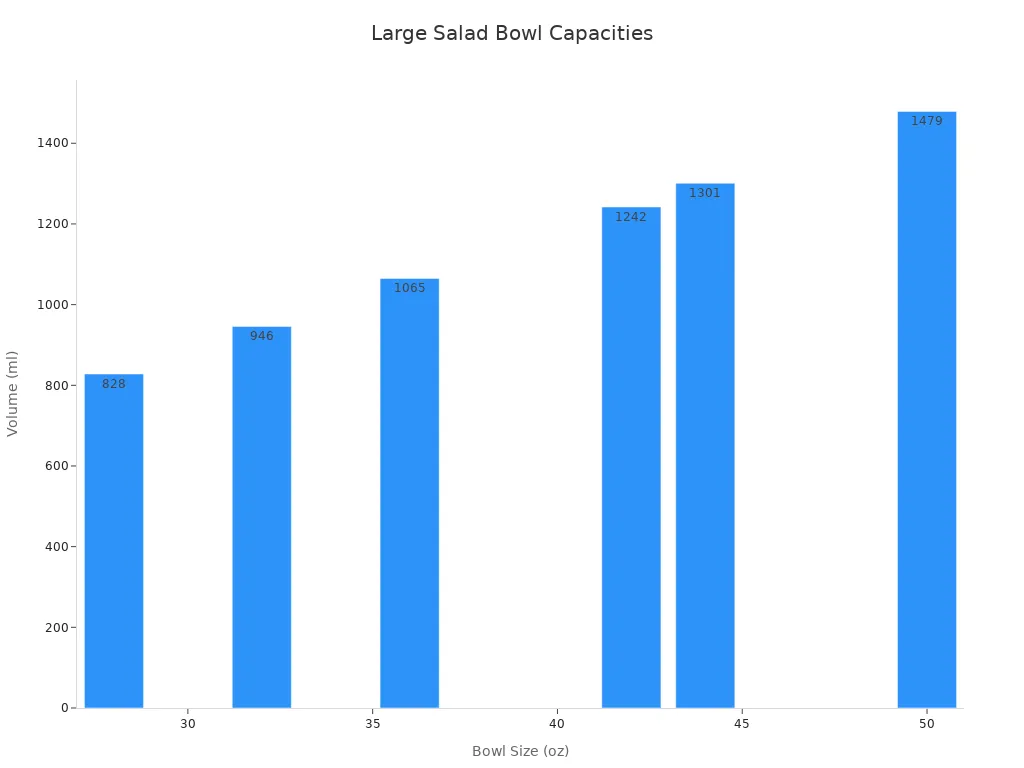
You must test container sizing in active kitchen environments before making purchasing decisions. Denser items like cold noodles fit into 48 oz platter bowls. Light mixed greens fit into 42 oz sizes.
Conduct Sample Testing with Real Menu Items: Fill sample containers with actual ingredients, dressings, and toppings during service to observe fill level, mixing space, and lid clearance.
Evaluate Bowl and Lid as a Complete Set: Check sealing strength, lid height, and stacking stability together with the selected bowl size.
Base Size Selection on Usable Capacity and Portion Standards: Select container sizes based on practical portion targets rather than brimful capacity.
Perform a Field Test Under Operational Conditions: Transport closed samples; if the lid contacts food, usable capacity is too high for that item.
Provide Complete Specifications to Suppliers: Include food type, target portion, lid type, and handling conditions when requesting supplier quotes.
Lid Styles and Closure Mechanisms
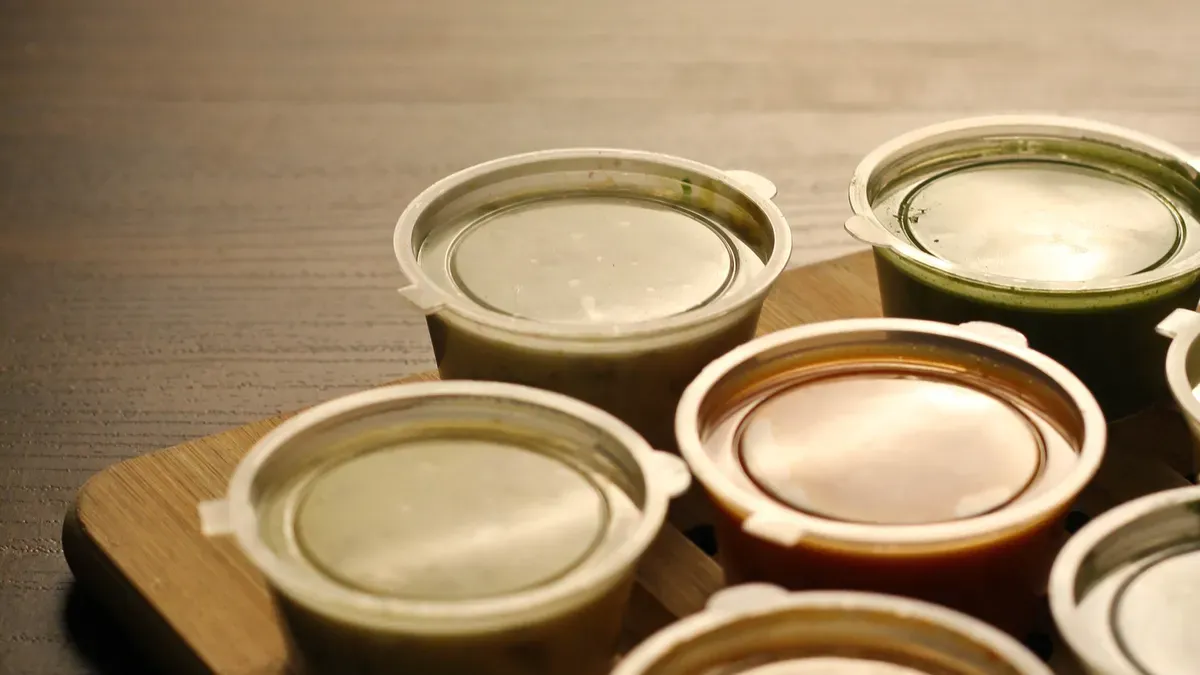
You choose lid styles to match specific food presentations and delivery requirements. Selecting the correct closure profile maintains product freshness during transit.
Flat Lids versus High-Dome Designs
Flat lids provide simple, practical solutions for standard menu items. You simplify kitchen operations when pairing flat lids with low-profile foods like dense grain bowls or pasta salads. You utilize flat covers to maximize shelf space efficiency in refrigerator displays. These flat surfaces enable clean stacking for takeout orders. You store filled containers efficiently in high-volume prep areas. However, flat lids offer limited vertical clearance. You should avoid flat lids when serving tall ingredient builds because toppings can get compressed.
Dome lids feature an elevated profile. You select high-dome PET lids when serving layered salads, tall garnishes, or delicate toppings. The raised ceiling provides ample vertical headspace. This design prevents lid contact from crushing delicate greens or garnishes. You protect menu presentation by keeping toppings intact. However, dome lids reduce stacking efficiency and occupy more shelf space during storage. You must avoid filling bowls to the absolute rim. Toppings pressing against any lid style can break the closure during delivery.
Leafy salads need more headspace than dense grain bowls, pasta salads, or chopped fruit because their volume-to-weight ratios differ. Enough headspace is also needed for toppings and lid closure, but unnecessary empty space increases material use and can make the product look underfilled.
You must evaluate how each cover type impacts storage and presentation:
Lid Type | Dressing Headspace | Topping Clearance | Storage/Stacking Implication |
|---|---|---|---|
Flat Lid | Limited vertical clearance; suited for dense, low-profile foods | Minimal; toppings may be compressed | More stackable; better for refrigerator storage and shelf space optimization |
Dome Lid | Creates more headroom for leafy salads and layered meals | Provides clearance to protect garnishes and toppings from being crushed | Less stackable; does not stack cleanly, taking up more shelf space |
Leak Protection and Rim Sealing Security
High-capacity bowls require strong closure security during off-premise transport. You must select lids with continuous peripheral locking mechanisms. Deeper bowls hold heavier food loads that flex container walls. Enhanced perimeter seals grip the bowl rim tightly. These tight seals prevent liquid leaks under shifting delivery pressure. Tight peripheral locking rings resist lid pop-offs during sudden movements or accidental impacts in delivery vehicles. Proper rim seals protect dressings and liquid sauces from spilling into outer packaging.
Tamper-evident designs enhance consumer trust and food safety. You benefit from specialized features like the TamperAlert Tab. This tab protrudes upward when torn to alert customers that someone opened the container. The torn tab remains attached to eliminate loose plastic waste. Lids featuring a printed security warning state “Do Not Purchase if Tab is Torn” to give customers a clear safety indicator.
A 360 Degree VanishingEdge Seal creates a tamper-resistant barrier. This mechanism inhibits lid lifting without tearing the tab while providing reliable leak resistance. Self-Aligning Closures allow your kitchen staff to snap lids securely from any direction. Staff can pack orders faster without worrying about misaligned lid snaps. Recessed lid trim works alongside this tamper-evident structure to enable efficient merchandising. Recessed top surfaces lock bowl bases into place for stable stacking during transit.
Material Options for Wholesale Salad Bowls
Selecting the correct material for Wholesale Salad Bowls balances operational performance against cost and environmental goals. You must evaluate how each substrate handles moisture, grease, and delivery conditions.
Kraft Paper and Fiber Solutions
Kraft paper and molded plant fibers offer sturdy structures for off-premise service. Bagasse uses sugarcane fiber from agricultural waste, providing excellent structural strength and heat tolerance. Kraft paper provides an affordable entry point for sustainable packaging. However, paper substrates require protective linings to resist liquid breakdown. You choose distinct coatings based on your delivery timeline:
Coating Type | Leak Test Performance | Key Durability Property | Typical Commercial Use |
|---|---|---|---|
PE (Polyethylene) | Holds for 4+ hours without softening | Excellent liquid and grease resistance | Fast-casual chains prioritizing delivery durability |
PLA (Polylactic Acid) | Holds for 60-90 minutes before softening | Good liquid resistance; handles most dressings | Eco-conscious brands with industrial composting access |
Water-Based | Holds light salads for 30-45 minutes | Moderate liquid resistance; PFAS-free | Quick-consumption items and dry salads |
You must verify environmental and safety standards when purchasing fiber bowls. ASTM D6400 and BPI certifications confirm compostability in American industrial settings, while EN13432 validates European market standards. You should request third-party testing reports like Total Organic Fluorine tests to confirm your packaging remains free of added PFAS chemicals. Fast-casual chains using PE-coated kraft bowls report leak complaints below 0.5 percent during delivery.
Clear Plastic and Compostable PLA
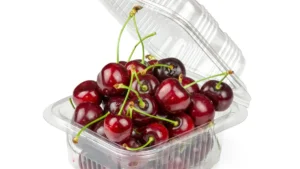
Clear plastic containers maximize product visibility in retail displays. Clear PET offers superior optical clarity to showcase fresh ingredients, colorful garnishes, and complex salad layers. PET resists impact damage during transport. Built-in anti-fog treatments keep clear lids transparent in refrigerated display cases.
Compostable PLA options derive from renewable plant sources like corn starch. PLA maintains cold food visibility while supporting fully compostable programs. PLA features a heat deflection temperature of 55–60°C, which perfectly suits standard cold salads served at 4–10°C. However, petroleum plastics generate greenhouse gas emissions during fossil fuel extraction and manufacturing. Bio-based plastics reduce fossil fuel dependency, but PLA requires industrial composting facilities to decompose properly without releasing landfill methane.
Rim Diameter Standardization and Inventory Control
Managing packaging inventory requires smart physical design choices. Standardizing your container rim diameters simplifies daily operations and cuts total purchasing expenditures across your business.
Consolidating Lid Sizes Across Bowl Capacities
You streamline kitchen assembly lines by selecting salad bowls with uniform top diameters. Manufacturers design multiple bowl volumes—such as 20 oz, 24 oz, and 32 oz options—to share a single rim width. Staff members grab one lid style to fit three different container sizes. You eliminate prep station confusion during busy lunch rushes. Employees close orders faster, which increases your overall hourly kitchen output.
Single-diameter bowl families reduce lid stock keeping units (SKUs) in your storage room, cutting carrying costs and streamlining reordering processes.
Standardized dimensions prevent costly order mistakes in high-volume delivery operations. Your kitchen staff will not waste precious time searching for matching covers. Ordering a single lid size in larger bulk quantities helps you secure better volume discounts from suppliers. You protect your profit margins while keeping your pack-out station organized.
Nesting Efficiency and Storage Metrics
Nesting design directly impacts your total back-of-house storage space. Engineered stackable bowls nest tightly inside each other, maximizing vertical space on prep shelves. You store significantly more physical containers per square foot of shelf area. Tightly stacked bowls prevent tipping hazards, keeping your storage aisles safe for kitchen personnel.
Compact nesting reduces freight shipping costs for your business. High-density stacking allows suppliers to pack more bowls into each transport box. You pay less freight per unit when shipping nested containers. Kitchen workers retrieve nested bowls smoothly without sticking or jamming during service. Efficient packaging stacks streamline your daily operational workflow, from delivery truck offloading down to final order packaging.
Sourcing and Procurement Strategy
Smart purchasing decisions protect your restaurant profits while maintaining strong packaging performance. You must analyze the total cost of ownership rather than focusing on the initial purchase price alone.
Unit Cost Optimization and Order Volumes
Wholesale paper salad bowls from China typically range from $0.10 to $0.50 per unit. Buying in bulk unlocks higher discount levels, but hidden expenses can quickly erase your savings. You must account for shipping fees, import tariffs, and minimum order quantities during price calculations. Cheap plastic containers might save money upfront, yet low-quality options sometimes contain industrial-grade calcium carbonate. Eco-friendly bowls cost 3 to 4 times more than ultra-cheap plastic, but sustainable options prevent costly customer complaints and legal liabilities.
Your material choice directly shapes ongoing container expenses across your supply chain:
Material | Unit Cost Ranking (Wholesale) | Cost Influence on Procurement |
|---|---|---|
Kraft | Most affordable | Lowest upfront cost; widely available; best for cost-sensitive bulk purchasing |
Bagasse | Mid-range | Slightly higher than Kraft; offers long-term savings via lower waste fees and compliance protection |
PLA | Highest | Highest upfront cost; subject to feedstock volatility; justified only if sustainability goals outweigh cost |
Protect your capital by establishing strict payment arrangements with international vendors. Pay a 30 to 40 percent deposit after signing your contract. Transfer advance payments directly to raw material suppliers through trustee methods. Retain 10 to 20 percent of the total cost as a quality guarantee deposit, which you pay only after final inspection.
Supplier Reliability and Customization Options
Partnering with dependable vendors guarantees steady inventory levels and consistent material quality. You must request physical samples to run real-world testing before signing bulk contracts for Wholesale Salad Bowls.
Controlled Fill Test: Pack sample bowls with actual food portions, seal them using standard procedures, and check for rim leaks after your typical holding period.
Handling Test: Place filled containers inside delivery bags, then simulate drops, shaking, and tilting to evaluate total structural strength.
Leak & Performance Tests: Conduct upright liquid tests, tilt checks, and odor transfer assessments on specialty dishes.
Holistic Sample Approval: Inspect the complete unit together, evaluating the bowl, lid fit, printing, and coating under realistic food contact conditions.
You optimize operational costs by matching usable capacities directly to your menu items. Selecting proper flat or high-dome lid profiles protects product presentation during transit. Standardizing rim dimensions across bowl sizes simplifies your back-of-house inventory and speeds up kitchen pack-out lines.
Always request physical testing samples from suppliers before placing bulk orders. You must evaluate stacking stability under a compressive load of 2–4 filled units high to prevent rim seal shifts. Verifying real-fill performance and lid seal tightness prevents messy delivery leaks. Balancing material durability with smart bulk purchasing of Wholesale Salad Bowls protects your restaurant profit margins while ensuring high customer satisfaction.
FAQ
What container size works best for side salads?
You should choose 12 to 16 oz (355 to 473 ml) bowls for side salads and starter appetizers. These smaller capacities control food portions effectively while keeping greens crisp.
How do standardized rim diameters benefit kitchen operations?
Standardized rim diameters allow multiple bowl capacities to share one lid size. You reduce lid inventory stock keeping units in your storage area. Your kitchen staff packs off-premise orders faster during busy rush hours.
Which lid style prevents topping damage on layered salads?
You should select high-dome PET lids for tall, layered salads. The elevated ceiling provides extra vertical headspace. This extra room protects delicate garnishes and toppings from getting crushed during delivery transport.
What heat limit applies to compostable PLA salad bowls?
Compostable PLA containers feature a heat deflection temperature of 55 to 60°C. You must use PLA packaging strictly for cold foods served between 4 and 10°C to prevent warping.
How do you test bowl stackability before bulk purchasing?
You evaluate stacking stability by testing filled containers under a compressive load of 2 to 4 units high. This test verifies rim seal tightness and prevents physical collapse during off-premise transit.