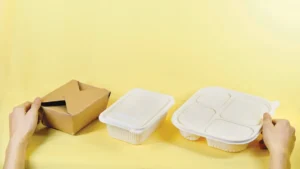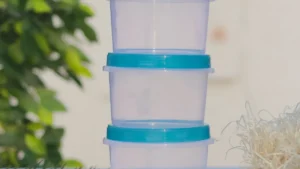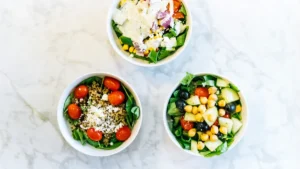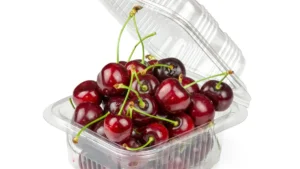
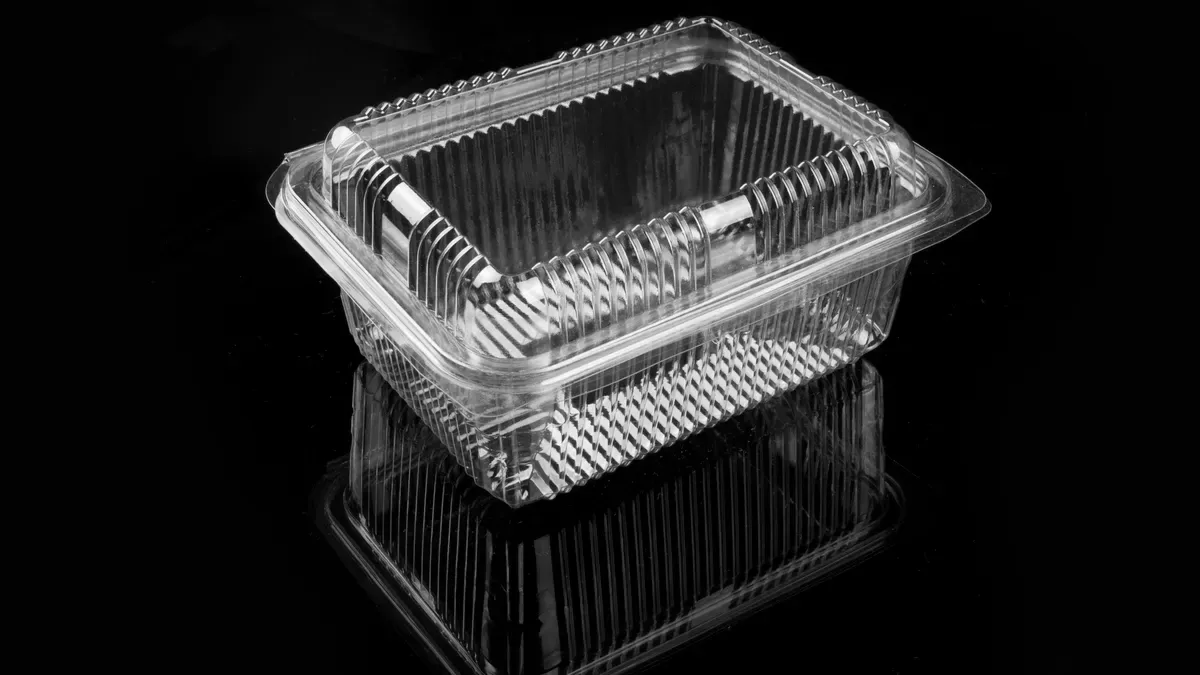
Selecting rigid packaging determines your food presentation. Clear Clamshell Containers made from Polyethylene Terephthalate (PET) offer glass-like clarity for cold food displays. Polypropylene (PP) provides heat resistance and microwaveability for hot meals. You choose PET for visual appeal in cold cases. You select PP for safe meal reheating.
Metric | Forecast for 2026 | Supporting Detail |
|---|---|---|
Global Market Size | USD 9.69 Billion | Grows at 4% CAGR to USD 12.74 Bn by 2033. |
Food Industry Share | 46% of market revenue | Driven by demand for ready-to-eat meals. |
PET Share | 42% of market | Dominates due to clarity and recyclability. |
You evaluate options across optical transparency, temperature tolerance, structural durability, barrier performance, and recycling infrastructure.
Key Takeaways
Choose PET containers to showcase cold foods with clear visual presentation.
Select PP containers for hot takeout meals and safe microwave reheating.
Use PET packaging for strong oxygen protection and sharp product display.
Rely on PP packaging for durable moisture resistance and flexible impact strength.
Check local recycling programs to guide your business packaging choices.
Optical Clarity and Visual Display
PET Glass-Like Clarity for Cold Foods
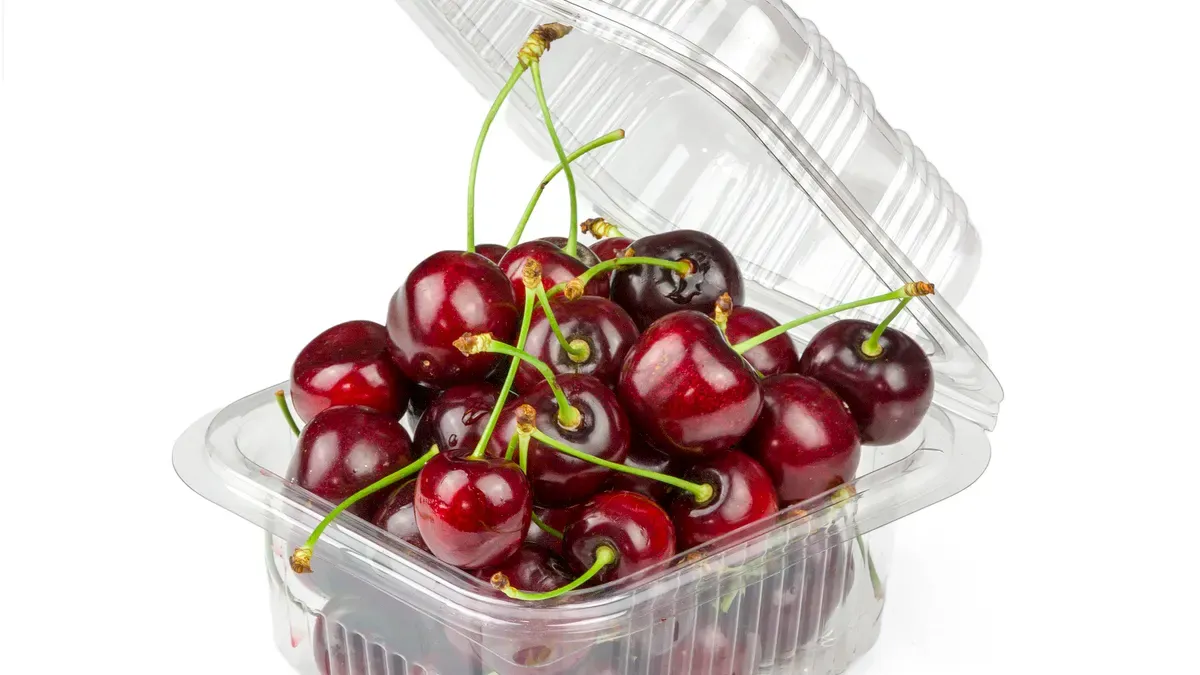
You select retail packaging to present fresh ingredients directly to shoppers. Polyethylene Terephthalate provides glass-like transparency inside refrigerated display cases. Shoppers evaluate food quality within seconds after looking at your displays. Superior visual clarity builds immediate trust between your store and your customers. High visibility reduces customer hesitation and drives impulse purchases in cold deli sections.
Clear Clamshell Containers made from PET allow shoppers to inspect essential visual attributes before purchase. You display vibrant colors in berry mixes, cut fruit, and layered salads effortlessly. High light transmittance levels ensure your fresh items stand out clearly under bright store lights. Premium food optics increase your daily sales volume.
Material | Property | Typical Value | Test Standard |
|---|---|---|---|
PET (Polyethylene Terephthalate) | Total Light Transmittance | ≥ 90% | ASTM D1003 |
PET (Polyethylene Terephthalate) | Haze | ≤ 3% | ASTM D1003 |
PET clear packaging highlights critical product details directly to buyers:
Product freshness
Color quality
Portion size
Overall appearance
A clear PET or PP clamshell with no anti-fog treatment will still fog in a cooler because the bare plastic’s low surface energy makes water bead.
PP Translucent Haze and Display Trade-Offs
Polypropylene creates a distinct translucent haze due to its natural polymer structure. This cloudy appearance diffuses overhead light and reduces visual sharpness inside display coolers. Customers struggle to see subtle food textures or precise portion arrangements through semi-opaque container walls. You lose visual impact when placing cold salads, sliced fruits, or delicate deli desserts inside PP packaging.
Hot takeout applications shift consumer priorities away from pristine visual display. Customers value heat retention, spill resistance, and microwave convenience over glass-like clarity when purchasing warm meals. You choose PP packaging to safely insulate cooked entrees and reheatable food sides.
The semi-clear material allows basic contents identification while supporting high temperature stability. Your kitchen staff can quickly identify orders without opening lids during busy service hours. This practical balance makes translucent PP ideal for hot food delivery operations.
Temperature Limits and Heating
PET Cold Display and Freezer Performance
You must evaluate precise thermal thresholds when choosing clear packaging for your food operations. Polyethylene Terephthalate maintains its structural form within a strict working window of -20°F to 120°F (-29°C to 49°C). Standard amorphous PET performs exceptionally well in cold display cases and commercial walk-in freezers. Cold temperatures will not cause this rigid material to warp, crack, or lose optical clarity. You can safely store pre-packaged deli meats, chilled pasta salads, and frozen desserts inside PET clamshells without damaging structural integrity.
High heat creates immediate operational risks for amorphous PET containers. Heat exposure above 120°F (49°C) triggers thermal softening and severe structural distortion. Warm food items cause PET walls to sag, bow, and leak along sealed edges. You must never place hot entrees, fried items, or freshly cooked sides into standard PET clamshells. Kitchen staff must completely cool prepared foods before closing PET lids. You must also instruct customers to remove all PET lidding before heating food.
Material | Safe Thermal Operating Range | Primary Thermal Application | Key Risk Condition |
|---|---|---|---|
Standard PET | -20°F to 120°F (-29°C to 49°C) | Cold refrigerated displays and freezers | Thermal softening and distortion above 120°F |
Polypropylene (PP) | 0°F to 250°F (-18°C to 121°C) | Hot takeout, hot-fill, and microwave heating | Fragility under deep sub-zero freezing conditions |
PP Microwave Safety and Hot-Fill Performance
Polypropylene offers superior thermal resistance across a operating spectrum of 0°F to 250°F (-18°C to 121°C). Semi-crystalline PP handles hot foods without melting, warping, or weakening. Kitchen staff can pack boiling soups, hot pasta, and freshly fried chicken directly into PP clamshells. Commercial food kitchens rely on PP packaging for high-temperature food service operations.
Hot-fill packaging processes demand materials that withstand sustained heat. PP packaging handles hot-filling and microwave reheating with complete safety.
Microwave safety: PP is routinely FDA-cleared for repeated microwave use, withstanding temperatures of 95–100°C.
Hot-fill capability: PP tolerates sustained temperatures up to 120°C, making it preferred for retort-style packaging.
Typical hot-fill temperature: Hot-filling is commonly performed around 93°C.
Commercial food service operators use mineral-filled PP options for extended heat performance. Manufacturers rate specialized MFPP containers heat-resistant up to 250°F and safe for microwave reheating under 2 minutes. These containers are completely BPA-free and PFAS-free, confirming high thermal performance and chemical safety.
Research from the Plastics Industry Association confirms that PP (plastic #5) is safe up to approximately 230°F (110°C) in microwave applications, establishing its FDA-cleared status for such use.
Material | Hot-fill suitability | Microwave reheating suitability | Key safety condition |
|---|---|---|---|
Standard PET (clear amorphous) | Not addressed in source; generally unsuitable for hot-food contact due to softening risk | Normally unsuitable; softening or distortion occurs under hot-food conditions | Must be used only for cold display; remove PET lids before heating |
PP (semi-crystalline polyolefin) | Not specifically validated in source; requires manufacturer confirmation | Generally suitable when labeled or validated; mature performance for reheating | Must use validated PP lid with venting; avoid repeated reheating unless manufacturer validates repeated-use conditions |
CPET (crystallized PET) | Not addressed; engineered for controlled high-temperature applications | Suitable in engineered prepared-meal systems; frozen-to-hot dimensional stability | Must use only the designed lidding system; separate heat validation required for seal film and adhesive |
You protect your food presentation and customer safety by matching thermal limits to menu items. Choose PET for vibrant cold displays. Select PP for dependable hot food takeout.
Structural Strength and Durability
PET Rigid Crack Resistance
You select PET clear packaging for reliable structural firmness during cold food distribution. The material’s energy absorption characteristics allow the container to distribute shock forces across its entire physical structure. This structural behavior prevents localized stress concentrations that cause catastrophic failure under drop impacts. PET naturally maintains excellent rigidity and impact resistance at standard refrigeration temperatures.
Radius corners replace sharp angles along vulnerable clamshell edges. This geometric design increases the material cross-section at key stress concentration areas. Consequently, your packaging prevents corner splitting and edge cracking during rough kitchen handling or delivery.
The medical device industry’s shift toward PETG clamshells demonstrates the critical role of impact resistance in packaging design. A surgical instrument manufacturer specifies PETG because it can absorb the mechanical stress of handling without cracking, maintaining sterility through distribution.
PET becomes more brittle at freezer temperatures below 32°F (0°C). However, the shatter-resistant material generally remains functional across cold-chain handling environments.
PP Impact Absorption and Hinge Strength
Polypropylene absorbs severe drop impacts through its flexible molecular structure. You can open and close PP packaging repeatedly without tearing the structural connection seam. Minimizing stress concentration remains critical for living hinge longevity in daily food service operations. Living hinges simplify container manufacturing while providing seamless utility for customer opening and closing.
PP is more rigid and fatigue-resistant than HDPE, meaning it holds its shape well and can endure repeated flexing, bending, and mechanical stress.
Hinge performance correlates directly with the specific bend angle during use:
At a 90° fold, strain measures 18.6% and cycle life comfortably exceeds 5 million cycles.
At a 270° fold, strain reaches 40.7% and fatigue life drops to roughly 10,000 to 50,000 cycles.
Manufacturing factors strongly affect living hinge durability over time. Poor gate location or skipped pre-flex reduces total cycle life by 80% or causes failure before 50,000 cycles. Proper molding processes guarantee your clamshells endure repeated meal service.
Barrier Properties and Freshness
Oxygen and Gas Barrier in PET
You need strong gas barriers to preserve fresh deli foods and cold produce in retail displays. Polyethylene Terephthalate blocks ambient oxygen from entering your clear packaging. Low gas permeation slows oxidation processes in sliced meats, cheeses, and prepared cold salads. You extend short-term product shelf life by keeping atmospheric oxygen away from vulnerable food ingredients.
Testing confirms specific barrier metrics for recycled PET packaging materials:
Material | Oxygen Transmission Rate (OTR) | Moisture Vapor Transmission Rate (MVTR) |
|---|---|---|
50% recycled PET | 0.08 cm³/m²·day·atm | 2.1 g/m²·day |
High barrier protection works exceptionally well for static chilled foods. However, highly respiratory fresh fruits require gas exchange. Experimental storage tests on fresh blueberries inside sealed containers demonstrate clear performance limits:
By Day 5: 62% of blueberries developed visible mold.
By Day 7: 100% of blueberries showed off-odors, specifically ethyl acetate.
These low permeability rates prove too low for safe long-term storage of active living produce. You must select vented containers when packaging respiring fresh berries.
Moisture Vapor Barrier in PP
Polypropylene provides exceptional protection against moisture loss and external vapor penetration. You choose PP clamshells when packing hot, cooked meals or crispy fried foods. The non-polar polyolefin polymer structure naturally repels moisture vapors. Hot food items maintain vital internal juices while container walls block outside humidity.
Your food service kitchen prevents dry entrees and soggy delivery orders by using PP packaging. Moisture stays trapped inside warm saucy dishes without drying out prepared meats during food transit. Meanwhile, engineered lid vents release excess trapped steam without weakening structural container hinges. You keep hot takeaway meals warm, moist, and delicious for every delivery customer.
Polypropylene also prevents fat and grease absorption along container surfaces. Hot oily foods will not weaken container walls or cause messy leaks during handling. You ensure clean transportation for heavy takeout meals.
Recyclability and Resin Costs
Resin Code #1 PET Recycling
You evaluate environmental impact by inspecting municipal recovery streams in your target distribution markets. Plastic #1 PET benefits from widely established collection networks across the United States. Consumers easily recognize the triangular resin identification code stamped on clear packaging. A 2012 study by Moore Recycling Associates, titled ‘Plastic Recycling Collection National Reach Study,’ found that in 2011, 57% of American communities accepted PET clamshell packaging for recycling.
Sorting machinery handles curved bottles and flat thermoformed containers differently at municipal recycling plants. Molded clamshells flatten out on conveyor belts and jam automated sorting equipment. This physical behavior creates distinct processing hurdles for local waste management programs.
Although most recycling programs accept #1 Plastic bottles, some may not accept molded clamshell containers because they are currently incompatible with their recycling systems.
Resin Code #5 PP Cost and Infrastructure
You face different economic trade-offs when purchasing Polypropylene containers for hot food service applications. Polypropylene features significantly lower municipal recycling rates across North America. Many material recovery facilities lack the specialized optical sorting equipment needed to process rigid #5 containers efficiently. Consequently, local curbside collection programs frequently route polypropylene containers directly to regional landfills.
Procurement costs vary dramatically between virgin resins and recycled post-consumer materials. The high expense of collecting and washing post-consumer plastics elevates market prices for recycled pellets.
Resin | Recycling Rate | Cost per Pound |
|---|---|---|
PET (Code 1) | 33% (US bottle collection rate, 2023) | rPET historically trades at 10-40% premium over virgin PET |
PP (Code 5) | ~8% (US recycling rate, 2024) | rPP pellets trade at ~$1.36/lb vs $0.55-$0.75/lb for virgin PP |
You pay a substantial financial premium when selecting recycled resins over virgin materials. Virgin PP resin provides lower initial material expenses for high-volume takeout operations. You must evaluate raw material costs, local waste options, and corporate sustainability targets before choosing packaging solutions.
Choosing Clear Clamshell Containers for Food Service
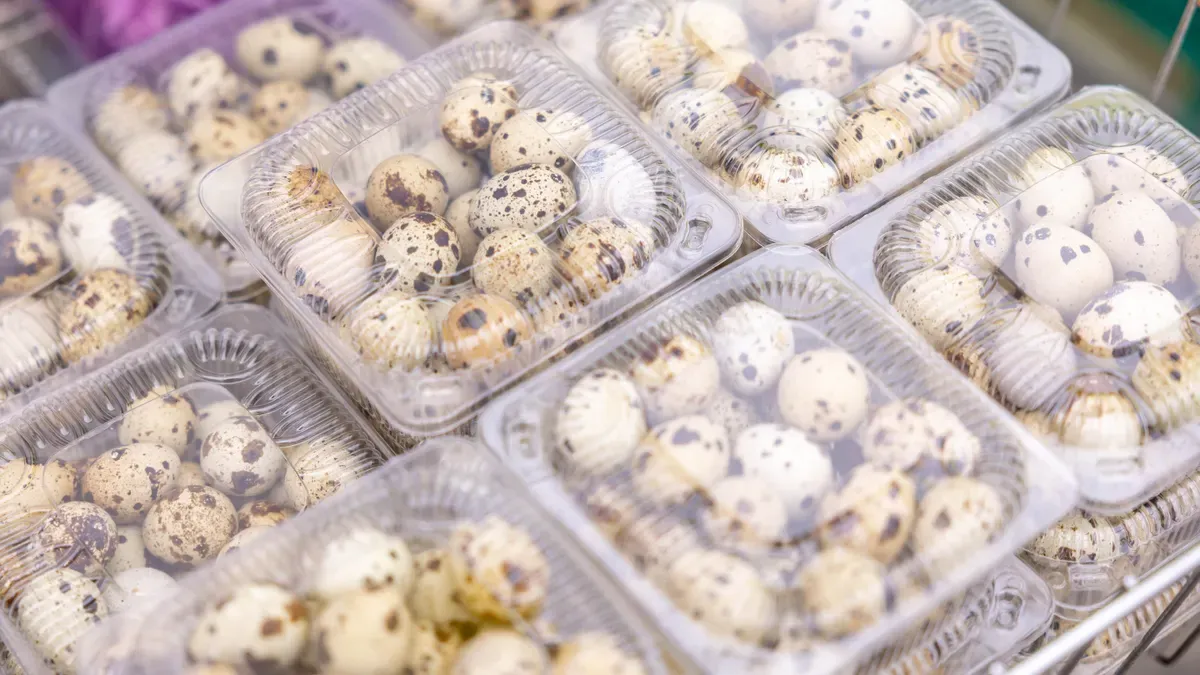
PET Clear Clamshell Containers for Cold Prep
You choose clear clamshell containers based on food temperature profiles, visual presentation goals, and packaging costs. Polyethylene Terephthalate suits cold food prep best. You display fresh ingredients directly to retail customers using this crystal-clear material. Glass-like clarity highlights vivid natural colors and builds customer trust immediately. High visual appeal drives quick impulse purchases across grab-and-go retail display cases.
PET features high rigidity and a density near 1.35 g/cm³. Stiff structural properties maintain container shape under internal condensation while protecting delicate items during handling. You rely on PET for retail display because structural firmness prevents crushed food edges during stacking and transit. The strong plastic shell safeguards delicate food presentation throughout transport.
Cold prep operations benefit from crystal-clear PET packaging across specific menu categories:
Deli products including sliced meats and specialty cheeses
Fresh produce items such as berries, cherry tomatoes, and cut fruit
Prepared cold meals such as mixed greens, deli salads, and fresh sushi
Retail bakery items like pastries, muffins, cookies, and cake domes
Maximum visibility showcases food freshness and portion sizes clearly to store buyers. The convenient hinge design allows kitchen staff to pack food quickly during peak service hours. Customers open and reclose the package easily without damaging closure seals. This reliable functionality enhances consumer convenience during daily meal consumption.
However, standard PET softens above 70°C. You must avoid hot food contact to prevent thermal distortion and container leakage. You select PET clear clamshell containers to drive higher sales volume through superior shelf appeal in cold display cases.
PP Clamshells for Hot Takeout Solutions
Polypropylene provides essential heat resistance for hot takeout service. Semi-crystalline PP handles continuous temperatures up to 230°F (110°C) safely. Kitchen staff pack cooked entrees, hot sandwiches, and warm meal bowls directly into PP packaging without softening risks. The durable plastic retains structural integrity under steam and high thermal loads.
PP features a lower resin density near 0.90 g/cm³, using less resin per unit. This lightweight polyolefin absorbs mechanical stress through flexible elastic deformation. Consequently, PP containers resist cracking when unexpected drop impacts occur during food delivery. Flexible walls protect irregular food shapes without structural fracturing.
You evaluate key selection criteria between both materials before placing commercial packaging orders:
Selection Criterion | PET Clamshell | PP Clamshell |
|---|---|---|
Transparency Profile | Crystal-clear display for presentation | Semi-translucent appearance for utility |
Upper Heat Threshold | Softens above 70°C | Heat resistant up to 230°F (110°C) |
Reheating Capability | Unsuitable for hot food heating | Microwave-safe for quick reheating |
Material Density | Approximately 1.35 g/cm³ | Approximately 0.90 g/cm³ |
Structural Durability | Stiffer structure; higher rigidity | Flexible; elastic impact protection |
Ideal Food Application | Cold prep, sushi, salads, bakery domes | Hot meals, takeout entrees, wholesale trays |
Customers reheat takeout meals inside microwave-safe PP packaging conveniently without transferring contents to another dish. Semi-translucent container walls allow kitchen crews to identify menu orders quickly without opening lids during rush periods. Lower material costs make PP economical for high-volume takeout operations and wholesale transport trays where impact protection matters more than crystal clarity. You select PP clamshells to ensure operational durability, thermal safety, and cost efficiency during daily hot food service.
You select packaging materials by balancing optical presentation against heat requirements. Polyethylene Terephthalate delivers glass-like clarity that drives impulse sales for cold salads, deli items, and produce. Polypropylene provides essential thermal resistance, preventing structural warping during microwave reheating and hot meal transportation.
Follow this simple selection framework before placing bulk orders. You must match your packaging choice directly to operational conditions. Review exact food serving temperatures and microwave reheating requirements first. Next, evaluate your store display lighting to maximize visual appeal. Finally, verify local municipal recycling streams for Code 1 and Code 5 plastics. Choosing the right Clear Clamshell Containers protects meal quality, improves customer satisfaction, and optimizes overall packaging expenditure.
FAQ
Can you microwave PET containers?
You must not microwave standard PET containers. Heat above 120°F causes PET plastic to soften, warp, and sag. Always check for a microwave-safe label or choose PP packaging instead to reheat your meals safely.
Which plastic packaging offers better visual clarity for cold food displays?
PET plastic provides glass-like clarity with light transmittance levels reaching at least 90%. You should choose PET Clear Clamshell Containers to showcase fresh salads, fruit, and cold deli items under bright store lights to drive impulse purchases.
What makes PP packaging suitable for hot takeout meals?
PP plastic handles heat safely up to 250°F. You can place hot soups, freshly fried foods, and warm entrees directly into PP containers. The material resists warping and supports safe microwave reheating.
How do recycling programs handle resin codes #1 and #5?
Municipal programs widely collect resin code #1 PET packaging across North America. Resin code #5 PP has lower recycling rates because many recovery facilities lack specialized optical sorting equipment for rigid polypropylene.